Marlote: A Designer's Real-World Review for Holiday Embroidery
As someone who has spent years reviewing machine embroidery design files and testing them on everything from delicate baby rompers to heavy-duty work aprons, I know that the difference between a good product and a great one often comes down to practical application. Today, I am evaluating Marlote, a Decorative Fonts collection that promises to blend classic serif elegance with a seasonal wreath frame. My goal here is not just to describe what it looks like on a screen, but to analyze how it performs when the needle actually starts moving.
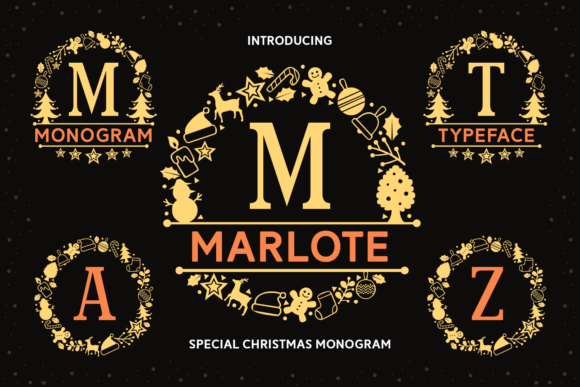
When you first open the file for Marlote, the immediate mood is undeniably festive yet sophisticated. It isn't the loud, cartoonish style of holiday clip art; instead, it feels like a high-end boutique label or a cherished heirloom piece. The way the classic serif letter integrates with the intricately detailed wreath creates a ready-made monogram that feels personal and polished. For an Etsy seller or a craft business owner, this visual personality is exactly what separates a mass-produced item from something that commands a higher price point.
Real-World Application: From Screen to Stitch
Let me take you through a specific scenario where I tested Marlote before recommending it for a client project. Imagine you are preparing a custom embroidered tote bag for a holiday market or a boutique gift set. You need something that looks professional but carries a warm, handmade touch. You place the Marlote design onto your digital mockup, centered on a canvas tote, and imagine the final result.
In this context, Marlote shines because it eliminates the guesswork of combining a font with a graphic element. The wreath acts as a natural border, framing the initial perfectly. When stitched, the design maintains its structural integrity without looking cluttered. The satin stitch used for the wreath leaves provides a smooth, lustrous finish that contrasts beautifully against the matte texture of the fabric. For a small shop product like a kitchen towel or a pillow cover, this level of detail elevates the perceived value immediately. Customers can see the effort in the stitching density, which builds trust in your brand consistency.
However, the devil is always in the details when dealing with embroidery files. While Marlote works wonderfully on flat surfaces like aprons, sweatshirt embroidery, or tea towels, it requires careful consideration for curved surfaces. If you are planning to use this for a cap or a hat, the curvature of the brim might distort the intricate corners of the wreath. In my experience, designs with complex decorative accents often lose their definition on tight curves unless the hoop size is adjusted specifically for that garment shape.
Where Caution is Required
Even the most beautiful design assets can fail if applied to the wrong substrate. There are specific situations where I would advise using Marlote with extreme caution or skipping it entirely. First, consider the fabric texture. If you are working with a highly textured knit or a thin, sheer material, the dense stitch areas of the wreath may cause puckering or pull the fabric out of alignment. In these cases, proper stabilizer selection becomes non-negotiable. Without a strong backing, the weight of the thread could ruin the drape of the finished product.
Another critical factor is the hoop size relative to the design dimensions. Because Marlote includes a detailed frame around the letter, it naturally takes up more space than a standard text-only font. If you attempt to fit this into a very small hoop, such as those used for tiny baby embroidery projects or miniature patches, the fine details of the wreath may become indistinguishable blobs of thread. Similarly, if you plan to embroider this on dark fabric, the contrast of the thread colors is vital. A light-colored wreath on a black background might look stunning, but if the thread choice is too similar to the fabric, the intricate serifs will disappear once stitched.
I also recommend avoiding this design for items that require frequent washing and heavy wear, such as daily-use work uniforms or children's play clothes, unless the stitch density is verified. The decorative elements, while lovely, add layers of thread that can be prone to snagging if not secured correctly during the digitizing process.
Visual Appeal and Customer Perception
For commercial embroidery projects, the visual impact of a design directly correlates to customer engagement. Marlote strikes a balance between traditional charm and modern cleanliness. When a buyer sees a personalized gift featuring this monogram, they perceive it as a thoughtful, curated item rather than a generic template. This perception is crucial for creative entrepreneurs who want to build a loyal following.
The design's ability to function as both a standalone logo and a decorative accent makes it versatile for various outputs. Whether you are creating printable mockups for your online store or producing actual physical goods, Marlote helps maintain a cohesive aesthetic. It signals to the buyer that you care about the quality of the presentation. A well-executed embroidery project using this font suggests professionalism and attention to detail, which are key drivers for repeat business in the handmade sector.
However, remember that the final look depends heavily on your execution. The thread colors you choose will dictate the mood. A deep forest green wreath on a cream letter exudes a rustic, cozy vibe, while a metallic gold version on a navy background offers a touch of luxury. Experimenting with these combinations in black and white mockups before committing to expensive thread spools can save you time and money.
Practical Designer Notes for Success
If you are ready to incorporate Marlote into your workflow, here are some essential steps to ensure a flawless outcome:
- Test on Scrap Fabric: Always run a test stitch on a scrap piece of the same fabric type you intend to use. This reveals potential issues with tension, puckering, or fabric distortion before you start on the final item.
- Check Thread Color Contrast: Ensure there is sufficient contrast between the thread and the fabric. Low contrast can make the intricate details of the wreath invisible in the finished product.
- Review Stitch Density: Inspect the density settings in your digitizing software. High-density areas in the wreath may need trimming or adjustment to prevent bulkiness.
- Confirm Hoop Size: Verify that your machine's hoop can accommodate the full width of the wreath frame without cutting off any decorative elements.
- Inspect Small Details: Zoom in on the smallest serifs and leaf tips. If they appear too thin, they may break during stitching or look muddy after trimming.
- Stabilizer Selection: Use the appropriate stabilizer for your fabric weight. A cut-away stabilizer is often best for maintaining the shape of the wreath over time.
- Licensing Verification: Before selling finished items or distributing digital embroidery files, confirm the licensing terms. Some fonts allow personal use only, while others permit commercial sales of the finished goods.
In conclusion, Marlote is a strong contender for anyone looking to add a touch of holiday elegance to their portfolio. It works exceptionally well for personalized gifts, boutique branding, and craft fair products where visual appeal is paramount. By understanding its strengths and respecting its limitations regarding fabric and hardware, you can create stunning finished products that delight customers and enhance your reputation as a skilled artisan. Just remember to test thoroughly, choose your materials wisely, and let the design speak for itself.